
Your First Network Marketing Team Meeting: A Simple Agenda — Network Marketing First Team Meeting Agenda
Plan a useful first network marketing team meeting with a clear agenda, practical roles, time limits, and follow-up that helps everyone know what to do next.
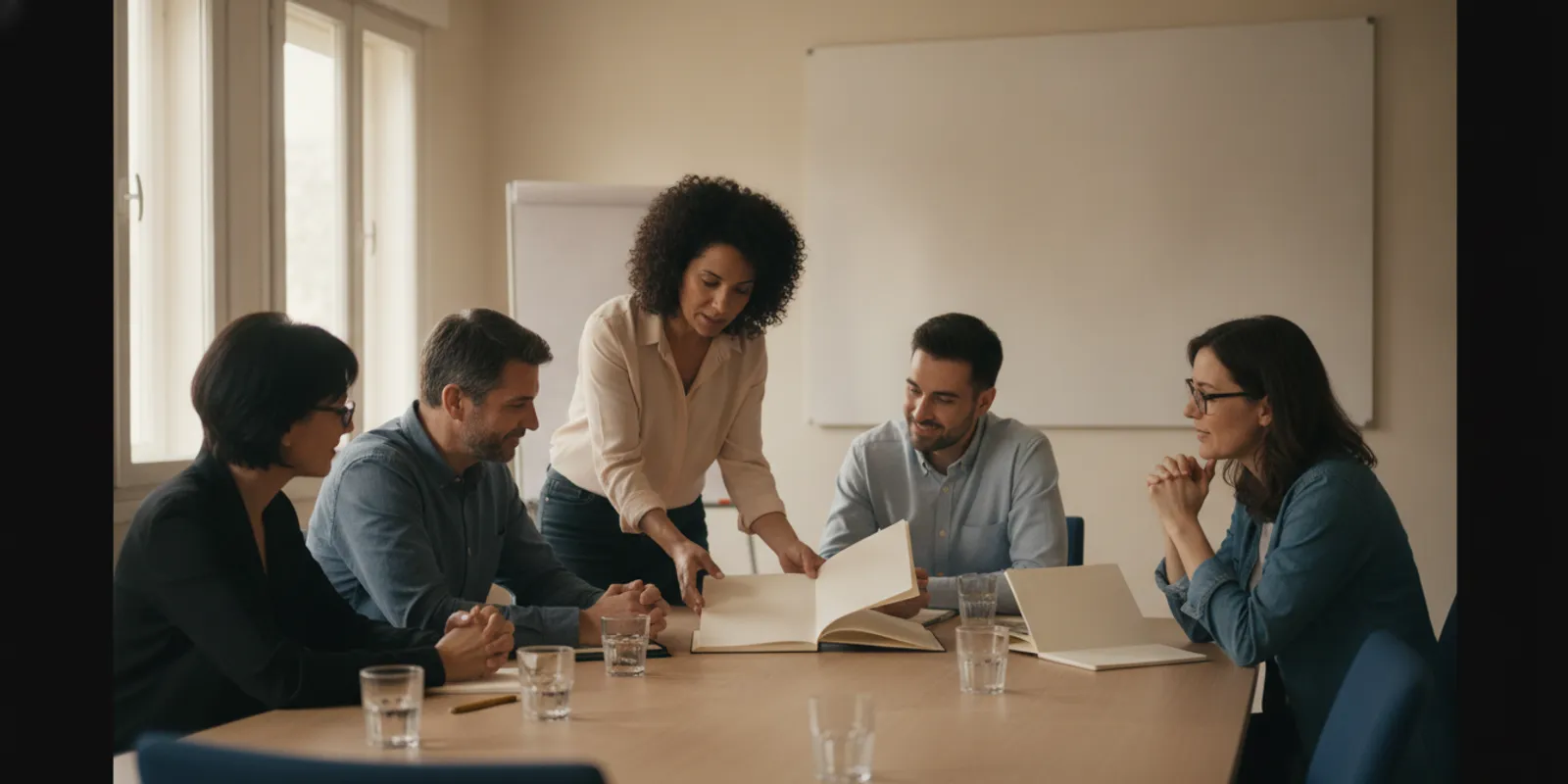
A network marketing first team meeting agenda should do more than fill an hour. It should help people understand the purpose of the meeting, learn one useful thing, participate without pressure, and leave with a clear next step. If this is your first time bringing a team together, keep the plan simple enough to repeat and flexible enough to fit the people in the room.
What should your first team meeting accomplish?
Start by choosing one primary outcome. A first meeting is not the place to teach every product detail, solve every business problem, and make a long-term plan for the whole organization. Trying to do all of that can leave new teammates overwhelmed and experienced people unsure what they were meant to contribute.
Instead, aim for a small and useful result. By the end, each person might be able to explain the meeting’s basic purpose, identify one appropriate action to take, and know where to ask a question afterward. The group might also agree on a regular meeting time or on what topic would be useful next time.
These goals are deliberately modest. A meeting cannot guarantee a particular sales result, team size, or income. It can give people a clearer process for learning, communicating, and serving customers. Keep the distinction clear when you invite people and when you discuss possible outcomes.
Write your outcome as one sentence before building the agenda. For example: “By the end of this meeting, everyone will know how to describe the product accurately and how to follow up with a customer who asks for more information.” That sentence becomes a filter. If a planned segment does not support it, save the segment for another meeting.
Turn the outcome into something observable
A useful outcome describes what participants can understand, decide, or practice. “Build momentum” sounds encouraging but does not tell you what should happen in the room. “Know where to find the current product guide and practice using it to answer one question” is specific enough to plan and check.
Try a simple test: could a participant tell at the end whether the stated goal was met? If the answer is no, make the outcome more concrete. You might set a goal such as identifying the owner for a common follow-up, agreeing on a meeting rhythm, or distinguishing a confirmed product detail from a personal opinion. Choose only one primary outcome; secondary benefits may happen, but they should not crowd the plan.
Keep the outcome within the meeting’s control. You can plan time to practice a conversation. You cannot promise what another person will buy, whether a new teammate will stay, or how quickly a business will grow. A clear boundary helps attendees understand what the gathering can offer without suggesting that one session determines anyone’s results.
How do you prepare before the meeting?
A useful meeting starts before people join. Preparation does not need to be elaborate, but it should remove avoidable confusion. Pick a time, choose a format, decide who will facilitate, and send a short invitation that explains why the meeting may be worth attending.
Choose the people and format
For a first meeting, invite the people who have a clear reason to be there: new teammates who need orientation, teammates who are helping with the topic, or people who have asked for a shared discussion. A small group is easier to involve than a large audience. If the team is spread across locations, an online meeting may be practical; if you meet in person, choose a place where people can hear one another and participate comfortably.
Do not assume that everyone has the same experience, schedule, access to technology, or comfort speaking in a group. Tell invitees how long the meeting will last, how to join, and whether they need to bring anything. For a short introductory session, “Bring one question you would like answered” is usually more useful than a long list of preparation tasks.
Decide who genuinely needs to attend. Someone who is helping teach or answer questions may be useful; someone who has no role or interest may not need another calendar commitment. Keep the invitation proportionate to the purpose. If people are invited to learn about a product, say that plainly. If the session is about meeting routines or customer questions, do not disguise it as a surprise presentation about a different topic.
Consider whether invitees need a choice of participation methods. An online participant may prefer to write a question in chat rather than speak. A person attending in the room may want to listen before joining the discussion. You can make participation easier by explaining that questions are welcome and that people may pass on an exercise. An accessible format is not a special add-on; it is part of making the meeting usable for the people you invited.
Set a realistic time limit
Choose the length based on the topic and the people attending, not on a desire to make the event feel important. A 30-minute meeting can work for a quick orientation. A 45-minute meeting gives room for one teaching topic and questions. A 60-minute session can include a more substantial practice activity, provided you protect time for discussion and closing.
Tell people the planned end time and finish close to it. If a question needs more attention, acknowledge it and offer a clear way to continue the conversation. Respecting the stated time makes it easier for teammates to decide whether they can attend future sessions.
Build a little transition time into the agenda. Moving from an introduction to a screen share, dividing into pairs, or collecting questions can take longer than expected. If every minute is assigned to a full presentation, a small delay can erase the discussion and closing. A time plan should help you make choices, not force you to rush people through the parts where they need to think.
Pick a facilitator and a note taker
The facilitator keeps the meeting focused, explains the transitions, and invites participation. The facilitator does not need to do all the talking or have an instant answer to every question. If someone else can take brief notes, ask them to capture decisions, unanswered questions, and agreed next steps. Notes should not become a transcript or a record of sensitive personal details.
In a very small group, one person can handle both tasks. If you are facilitating alone, use a written agenda and make a note of questions that need follow-up rather than trying to respond while also keeping time. Be clear about who will answer those questions and when people can expect an update.
Beforehand, agree on the note taker’s narrow job: record the meeting date and topic, the useful decisions, tasks people accepted, and open questions. Do not write down private stories merely because they were shared. If a customer example comes up, omit names and identifying details unless there is a clear and appropriate reason to include them. Keep the notes in a place the intended participants can access, and do not circulate them as a general marketing message.
Prepare the materials, not a script for every moment
Gather only the materials that support the meeting’s outcome. That might be a current product guide, a short example, a blank agenda, or a link to an appropriate policy. Check that a resource is current before you present it. If the topic touches product claims, price, availability, or company rules, do not rely on memory when an authoritative current document is available.
Make a simple run sheet for yourself with the start time, section lengths, key questions, and planned transitions. You do not need a word-for-word speech. A few prompts can help you stay natural: “Here is the outcome,” “Let’s try one example,” and “I will verify that detail after the meeting.” Keep the plan visible so you can return to it if a discussion runs long.
For an online session, test the meeting link and any screen-sharing material before attendees arrive. Have a backup way to share a document if the first method fails. For an in-person session, check seating, noise, and whether everyone can see any materials. Preparation should remove friction, not create a complicated production that distracts from the conversation.
Set expectations before people arrive
Use the invitation to tell participants what is and is not part of the session. State the topic, length, format, any optional preparation, and whether there will be a recording. Do not record by default just because a meeting platform makes it easy. If recording is genuinely useful, explain it in advance and follow the applicable rules and preferences of the participants.
Tell the group how questions will be handled. For example, people may ask questions as they arise, hold them for the question period, or send a written question. A simple expectation avoids confusion, especially when the group includes both new and experienced teammates. The invitation should also give a contact route for basic access problems so the meeting does not begin with several minutes of troubleshooting.
What is a practical first meeting agenda?
Here is a 45-minute agenda you can adapt. It gives the group a clear beginning, one central learning segment, space for questions, and a defined close. Adjust the minutes to suit your topic, but preserve the basic sequence: orient people, teach one thing, let them participate, and clarify what happens next.
- Welcome and purpose — 5 minutes. Welcome everyone, confirm the planned finish time, and state the one outcome for the meeting. Give people a quick way to introduce themselves, such as their name and one question they hope to answer. Do not turn introductions into a contest or require anyone to share private details.
- Shared expectations — 5 minutes. Explain how the conversation will work. For example, invite people to ask questions, allow others to finish speaking, and distinguish confirmed product or company information from personal opinion. If someone is unsure about a claim, agree to check an appropriate source instead of guessing.
- One focused teaching topic — 12 minutes. Teach a single practical subject that matches the stated outcome. Examples include how to find approved product information, how to listen for a customer’s actual question, or how to arrange a respectful follow-up. Use a simple example and avoid cramming several unrelated lessons into this section.
- Practice or discussion — 10 minutes. Give people a chance to apply the lesson. They might practice explaining where product details can be found, work through a sample customer question, or discuss what information they still need. Make participation optional and constructive; the aim is practice, not a test or a public ranking.
- Questions and clarification — 8 minutes. Invite questions related to the topic. Answer what you know, identify what needs checking, and assign an owner to follow up. If a question would take the group away from the meeting’s purpose, record it for another time rather than letting it consume the remaining agenda.
- Recap and next step — 5 minutes. Restate the key point, name any follow-up actions and owners, and say when or how the group will reconnect. Thank people for their time and end on schedule.
These time blocks are a working example, not a rule. If the group has only 30 minutes, shorten introductions and practice rather than removing the purpose and next-step sections. If you have a full hour, use the extra time for discussion or a second practice round, not an unrelated presentation. The meeting should feel complete when it ends.
How can you adjust the timing without losing the point?
For a 30-minute session, consider three minutes for welcome and purpose, three for expectations, eight for the teaching point, seven for practice, six for questions, and three for closing. That is a tight plan, so choose a topic that can be explained with one example. If there are many questions, capture the ones that need longer research and follow up afterward.
For a 60-minute session, you could use five minutes to welcome people, five to establish expectations, 15 to teach the subject, 15 to practice, 12 for questions, and eight to recap and agree on actions. The additional time should create room for participants to work through the material, not encourage the facilitator to add several unrelated subjects.
For a 15-minute check-in, remove the broad introduction and keep the group to one update or one question. State the purpose in one minute, spend seven minutes on the topic, four minutes on discussion, and three minutes on next steps. This format is too short for a complicated training topic. If people need background, a demonstration, and time to compare options, schedule a separate session rather than forcing it into a brief check-in.
Whatever length you choose, mark which sections are essential and which are flexible. The purpose, accurate information, and a closing plan are usually essential. The number of introductions or examples is flexible. When the schedule slips, trim a flexible element or make a follow-up plan; do not cut the closing so abruptly that nobody knows what happens next.
How can you make each agenda section useful?
Open with the purpose, not a long speech
People should know why they are there within the first few minutes. State the topic, the benefit of discussing it, and what the group will do. A plain opening might sound like this: “Today we are going to practice answering a product question by finding accurate information and asking what the customer wants to know. We will finish at 7:45 and leave time for questions.”
This kind of opening is more informative than a broad promise that the meeting will change someone’s business. It sets an achievable expectation and lets people decide how to take part. It also helps the facilitator return to the purpose if the conversation wanders.
Then give participants a low-pressure way to join. Ask for a name and a question, invite people to type a question, or offer a moment to think silently before discussion begins. Avoid a round of long personal stories if your group is large or the topic is narrow. People should have a chance to introduce themselves, but no one needs to prove their commitment or disclose private information before they can learn.
Teach one skill that people can use
Choose a topic with a clear boundary. “How to follow up after a customer asks for details” is easier to teach and practice than “everything about selling.” A focused lesson can show a sequence: listen to the question, clarify what the person wants to know, share accurate information, and ask whether they would like another conversation. Keep the customer’s choice central.
Use examples as illustrations, not as promises that a particular script or action will work for everyone. If the topic involves product features, price, availability, or company policies, use current approved materials. If you do not have a reliable answer, say so and check before repeating it. Accuracy builds more trust than improvising a confident-sounding response.
Make the lesson small enough that people can recall it later. One way is to teach a short sequence, then show the sequence in a scenario. For example, a customer asks whether a product is suitable for a particular need. The teammate can first listen without interrupting, ask what information the customer is looking for, check approved product material, and avoid making a claim that the material does not support. If the person wants time to decide, respect that choice. This example teaches a process without claiming that any particular conversation produces a sale.
Close the teaching segment by asking what remains unclear. A focused question such as “Which step would you want to practice once more?” produces more useful information than “Does everyone understand?” People may say yes to a broad question even when they are uncertain. Give them a chance to name the precise point they need clarified.
Make practice supportive
Practice helps people turn an idea into words they can use. Give the group a short scenario and a few minutes to try it in pairs or as a whole group. For instance, one person can play a customer asking for more information while the other practices asking a clarifying question and explaining how they would find an accurate answer.
Set a supportive tone before the exercise. Let people observe if they are not ready to speak, and do not criticize someone for being nervous or new. Afterward, ask what felt clear and what could be simpler. Offer one practical suggestion at a time. The point is to help people learn, not to judge personality, charisma, or who seems most likely to succeed.
Give the exercise a defined beginning and end. Explain the scenario, say how long people have, and identify one thing to notice. For instance: “Take two minutes each. Focus on whether you asked what the customer wanted to know before giving an answer.” Without that focus, role-play can become an improvised performance with no clear learning point.
Debrief the practice in a way that does not put anyone on trial. Ask the person who practiced what felt natural and what they would change. Invite observers to offer one specific observation about the process, not a judgment about the individual. If an example reveals a factual question, pause and verify the detail instead of letting a mistaken statement become the lesson people remember.
Some participants will prefer a written exercise. They can draft a follow-up message, mark where they would check product details, or choose which of several sample questions needs clarification. Providing more than one way to practice helps people participate without forcing everyone into a role-play format.
Handle questions honestly
Questions can reveal what the group needs next. They can also take a meeting far from its purpose. Listen carefully, repeat the question if that helps clarify it, and decide whether it can be answered accurately now. If not, write it down, identify who will check, and give a reasonable update plan.
Do not present personal experience as a guarantee or a universal result. Be especially careful when conversations turn to earnings, business opportunity, or what another person might achieve. Individual outcomes vary, and a team meeting is not a good place to make unsupported promises. If the topic requires an official disclosure or approved wording, use the appropriate current material rather than creating a shortcut explanation.
A useful answer can include a boundary: “I can tell you what I understand from this resource, but I do not want to guess about the detail you asked. I will check the current information and share what I find.” If the answer depends on individual circumstances, say that clearly rather than presenting one person’s experience as a rule for everyone.
For questions outside the agenda, use a visible parking list. Write the question in neutral language, ask whether the person is comfortable with that wording, and name an owner for follow-up. Do not dismiss it with “we will talk later” unless there is a real plan. At the same time, do not let one unplanned issue remove the promised learning time for everyone else.
What should you say in the invitation?
A good invitation answers the practical questions: who the meeting is for, what the group will cover, how long it will last, how to join, and what preparation is useful. Keep the description accurate. Avoid implying that attendance is mandatory, that a particular result is assured, or that someone must recruit or buy something to belong in the conversation.
You can adapt this simple message:
Subject: First team meeting — one practical topic
Hi everyone, I’m hosting a 45-minute team meeting on [date] at [time]. We’ll cover [specific topic], practice one example, and leave time for questions. We’ll finish by [end time]. Join here: [meeting details]. If you’d like, bring one question about the topic. Let me know if you need the details in another format.
Personalize the message with the actual topic and logistics. Do not use a vague subject line such as “big news” if the meeting is an ordinary training session. If invitees are in different time zones, state the time zone. If you need a response to plan the room or online format, ask for a simple confirmation without making attendance feel like a test of loyalty.
Include enough information to support a real choice
People can decide whether to attend when the invitation gives them a clear picture. Include the date, start time and time zone, end time, location or access instructions, the subject, and who to contact with questions. If the meeting will involve a product demonstration, say so. If it is a practice session, explain that the practice is optional or describe how it will work.
Avoid subject lines that create artificial urgency or suggest a secret will be revealed. Those tactics may increase curiosity briefly, but they do not help a teammate decide whether the meeting meets their needs. A direct subject like “Practice: finding a reliable answer to a customer question” tells people what they are being asked to attend.
Make any required preparation reasonable. Asking people to bring one question is different from asking them to complete a lengthy assignment before a first meeting. If preparation is essential, explain why and provide a realistic estimate of the time involved. If it is optional, say that clearly so people do not feel they have failed before they arrive.
How do you keep a first meeting welcoming?
A first meeting sets expectations for how the team communicates. Welcome questions from people with different levels of experience. Do not assume a new teammate knows internal shorthand, product terminology, or how the group normally works. Define unfamiliar terms and invite people to ask for clarification without embarrassment.
Share the speaking time. A facilitator can ask, “Would anyone who has not spoken like to add something?” but should not pressure a person who prefers to pass. When someone raises a concern, acknowledge it before moving on. A meeting is not useful if participants feel they must agree publicly or conceal uncertainty.
Keep the conversation focused on helpful actions and customer care. Do not turn the meeting into a comparison of who has recruited the most people, made the most sales, or achieved the most visible progress. Those comparisons can distract from learning and may create pressure. Recognize useful behaviors such as careful listening, accurate information, follow-through, and asking for help when needed.
Set a boundary around private information. Do not ask participants to disclose personal finances, health details, family circumstances, or customer information that is not needed for the discussion. If a real customer example is useful, remove identifying details and share only what the group needs to learn from it.
Make room for different experience levels
Experienced teammates may know the shorthand and assume a concept is obvious. Newer participants may not know which materials are current or where to find them. Explain the basics without talking down to people, and invite experienced attendees to add context only when it helps the goal of the session.
Use a question that lets people contribute at different levels: “What would you check first, and what would you want to verify?” A newer person can name a first step, while someone with more experience can describe a resource or a question to ask. This is more inclusive than asking only for stories of success, which can make the meeting seem like a showcase rather than a place to learn.
Do not assume quiet people have nothing to contribute. Some may be processing the material, using a different communication style, or unsure when it is appropriate to speak. Build in brief pauses, allow written questions, and let people pass. The goal is meaningful access to the discussion, not equal airtime measured by force.
Keep the boundary between learning and promotion clear
A meeting may discuss a product or a business opportunity when that is the stated purpose and the information is accurate. The important distinction is transparency. Do not label a promotional presentation as a neutral training session or imply that attending commits someone to a purchase or decision. Explain what the session covers and let people make their own choices.
If someone asks about earnings, explain only what is supported by current, appropriate information and avoid implying that one person’s experience predicts another’s. If you cannot substantiate a statement, leave it out and offer to check. A clear, careful conversation is more useful than an overconfident claim, especially for people who are deciding what questions to ask next.
What should you do when the conversation gets off track?
Some detours are useful. A question may expose a gap in the planned lesson or help several people. The facilitator can pause and ask whether the group wants to spend time on it now. If it fits the outcome, make room for it and shorten a less important section. If it does not fit, record it and explain how the group will return to it.
Try a calm redirect: “That is worth checking. I’ll add it to our follow-up list so we can give you an accurate answer. For now, let’s finish the customer-question practice we planned.” This recognizes the question without pretending it has already been solved.
If one person is taking most of the time, thank them for the contribution and open the floor to others. If the group is quiet, give people a moment to think, then offer a low-pressure prompt or invite written questions. Silence does not automatically mean people are uninterested; they may need more context or time to formulate a response.
Use a decision rule for detours
When a new question appears, consider three things: Does it affect the meeting’s stated outcome? Can it be answered accurately in the time available? Would answering it help more than one person in the room? If the answer to all three is yes, it may deserve time now. If not, record it and give it a place in the follow-up plan or a future agenda.
Keep the decision visible to the group. You might say, “We have six minutes left for practice and questions. This deserves a fuller answer, so I will capture it and send a verified response tomorrow. Is there a quick clarification that would help us continue the planned exercise?” This shows that the question matters while preserving the time everyone was promised.
If a discussion becomes personal or tense, slow it down. Restate the issue without assigning motives, remind people of the meeting’s purpose, and invite a practical next step. You do not have to settle every disagreement in a first gathering. Sometimes the responsible choice is to acknowledge different views, identify what information could clarify the question, and continue in a smaller conversation with the people involved.
What should happen after the meeting?
Follow-up turns a conversation into something people can use. Soon after the meeting, send a concise recap with the topic, the main learning point, agreed actions, and any unanswered questions with owners. Include a link to the correct resource when you have one. Do not send a long transcript or add unrelated promotional material that participants did not ask for.
Make the actions specific and voluntary. “Review the approved product guide and note one question” is clearer than “work harder this week.” Give an owner and a sensible due date when a task has been agreed. If no action was agreed, do not invent one just to make the recap look productive.
Check that promised answers are delivered. If you said you would verify a product detail, do so before sharing it with the group. If a question cannot be resolved, explain what is known and what remains uncertain. Reliability in small follow-ups is more useful than making promises about what the team will accomplish.
Ask for feedback with one or two simple questions: “What was useful?” and “What should we make clearer next time?” Use the answers to improve the next session, not to pressure people into praise. If the meeting was too long, too fast, or too broad, adjust the next agenda.
Write a useful recap
A recap can be brief and still complete. Start with the date and topic, then summarize the main point in a sentence or two. List actions only if people actually agreed to them. For every open question, note who will check it and when participants can expect an update. If there is a resource, link to the current version rather than attaching an old copy that could become outdated.
For example: “Today we practiced finding accurate information before answering a customer question. Alex will check the current availability detail with the appropriate source and send the answer by Thursday. If you want to review the product guide, use the current link shared here. Our next meeting will focus on [topic].” Replace the names, timing, and topic with facts that match your actual meeting. Do not copy the example as if those tasks or commitments have already happened.
Keep the recap neutral. Do not rank participants, quote a person’s private disclosure, or turn attendance into evidence of commitment. If the meeting produced no decisions, say what was discussed and what remains open. A plain, accurate follow-up is better than making the session appear more decisive than it was.
Close the loop on unanswered questions
Make a short question log with the question, the person responsible for checking it, the source or contact to consult, and the expected update date. This can be as simple as a few lines in the recap. Avoid recording unnecessary personal details. When you provide the answer, distinguish what the source confirms from what it does not address.
If a question needs more time, update the group before the promised date rather than disappearing. You can say that you are still verifying the information and give a revised timeframe. If the answer is unavailable, be direct about that. People can work with a clear limitation; they cannot make informed choices based on a confident guess.
How can you adapt the agenda for different situations?
For a small group of new teammates
Spend extra time on orientation and basic questions. Explain the purpose of the group, how to find current information, and how to ask for support. Keep the teaching segment narrow. A new teammate is more likely to remember a short sequence they have practiced than a long catalogue of tools, scripts, and expectations.
Use plain language and explain internal terms when they first appear. A new participant may not know the difference between a product question and a company-policy question, or who is responsible for answering each one. Describe the route: where to look first, who can help if the answer is unclear, and how to bring back a question without feeling that they should already know it.
Do not mistake a first meeting for a full orientation program. Some material is better shared in a written guide or a later session. Ask what new teammates need to do next and provide one manageable action. Give time for basic logistical questions, but avoid turning the meeting into a rapid list of every possible task.
For an experienced team
Do not repeat material people already know unless there is a reason to revisit it. Ask the group to identify a specific challenge, then use the meeting to compare approaches and clarify what information is reliable. Protect time for people who are less likely to speak first. Experience is useful when it is shared as context, not presented as a guarantee that others will get the same result.
Before the meeting, ask attendees to submit a question or choose from a small set of topics. That gives you a signal about what will be useful without allowing the agenda to grow without limit. During the discussion, distinguish a repeatable process from a personal preference. If two approaches differ, ask what circumstances each one addresses instead of trying to declare one universally correct without evidence.
For an online meeting
Send the access details in advance and check that the host can admit participants and share any materials. State whether cameras are optional and how people can ask questions, such as using the chat or raising a hand. Read questions aloud when needed so the whole group can follow. Keep slides or shared documents simple and readable; the meeting should still make sense to someone listening without them.
Begin with a quick access check, but do not spend a large part of the session on technical small talk. If a participant cannot join audio, offer a way to follow along or receive the material later. If you share your screen, describe what people are seeing and do not assume that a small text label is readable on every device.
Use online features only when they serve the goal. Breakout rooms can help a pair practice, but they may be awkward for a small group or for attendees who joined by phone. A chat prompt may work better when the question is simple. Decide how you will monitor chat so written contributions do not go unnoticed while you are presenting.
For an in-person meeting
Arrange seats so people can see one another rather than placing every chair in a row facing the facilitator. Check that the space is quiet enough for conversation and that any display can be read from the back. Bring a few printed copies only if they will help; a stack of materials is not a substitute for a clear explanation.
Start by telling participants where restrooms, exits, or refreshments are if that is relevant to the venue, then return to the purpose. If someone arrives late, welcome them without restarting the entire meeting. A brief summary of the current section can help them join without interrupting the group’s progress.
For a very short check-in
Use a 15-minute version only when the purpose is genuinely narrow. Spend two minutes on the purpose, eight minutes on one question or skill, three minutes on discussion, and two minutes on the next step. If the subject needs more explanation, schedule a separate session rather than rushing through it.
What mistakes make a first meeting less effective?
- Trying to cover everything. Too many topics make it hard to remember the central point. Choose one primary subject and save other questions for a later conversation.
- Leaving out the purpose. People cannot tell whether the meeting met its goal if no goal was stated. Put the outcome in the invitation and repeat it at the start.
- Talking without participation. A long presentation may leave no room to clarify or practice. Use questions and a short exercise to see what people understood.
- Making the meeting a pitch. Do not disguise a sales presentation as a training session. Describe the meeting honestly and separate optional information about products or opportunities from the stated learning purpose.
- Promising outcomes. A meeting plan can support learning, but it cannot guarantee sales, recruitment, or income. Keep claims realistic and use approved information.
- Letting the meeting run over. Ending late can make people less willing to attend again. Use a timekeeper or written agenda and move unresolved topics to follow-up.
- Finishing without ownership. If a question remains open, name who will check it and how the group will hear back. Otherwise, people may assume someone else is handling it.
Notice the warning signs while you are planning
If the agenda has several outcomes, more than one major teaching topic, and no time for questions, it is probably too full. If the invitation promises a result you cannot control, revise the promise before it goes out. If no one is responsible for checking claims or following up, decide who will take that role or make the limits of the session clear.
Another sign is an agenda built around what the facilitator wants to announce rather than what participants need to understand. Ask whether each segment has a direct connection to the outcome. A story or update can be useful, but it should not consume the practice and clarification time simply because it is easy to present.
How can you evaluate the meeting without turning it into a scorecard?
After a first session, review the plan against the original outcome. Did people have a clear understanding of the purpose? Was there enough time for the central topic and questions? Did unanswered questions have owners? These are practical checks on the meeting design, not measures of anyone’s personal value or likely business results.
Look at observable details. Did the session start and end near the time stated? Could participants find the materials? Did the practice example fit the lesson? Did several people have a chance to contribute? If one part was confusing, revise that part for next time. If the group had little to say, consider whether the topic was too broad, the prompt was unclear, or people needed more time to think.
Invite brief feedback in a format that suits the group. A one-question follow-up can ask, “What should we keep or change next time?” A quick anonymous response may help people be candid, but it is not necessary for every small meeting. Do not ask for praise as proof the session worked. Make the feedback request optional and use it to improve the experience.
Keep lessons from the review specific. “People seemed unmotivated” is an interpretation that may not explain what to change. “The opening took 15 minutes, leaving only three minutes for practice” is an observation that points to a practical adjustment. Separate what you saw from what you assume it means.
What might a first meeting look like in practice?
A time plan is easier to use when you can picture the meeting from start to finish. The examples below show how the same basic structure can serve different purposes. They are models to adapt, not scripts that every team must follow. Keep your actual meeting aligned with the topic you announced and the information you can verify.
Example: introducing the group and its way of working
Suppose the first meeting is mainly an orientation for a few new teammates. Choose an outcome such as: “Everyone will know who to ask for help and where to find current product information.” Open by stating that goal and giving each person the option to introduce themselves with a name and one question. Spend the next few minutes explaining how the group communicates and what kind of questions belong with which contact.
For the learning segment, demonstrate how to locate a current resource rather than reciting every product detail. Ask participants to find a sample item in the resource and say what they would do if the answer they need is not there. Practice the route using a fictional question, then invite people to share what would make the process easier. Close by confirming the specific contact or resource they can use next time. This session gives people a map without pretending that one meeting can teach everything.
Example: practicing a customer follow-up
If the group already knows the basic structure, make the central topic a respectful follow-up. Set an outcome such as: “Participants can practice asking whether a customer wants more information and agreeing on a convenient next contact.” Introduce a brief scenario: someone has asked for details but has not said when they want to talk again. Show a neutral sample question, such as “Would you prefer that I send the information now, or would another time work better?”
Invite people to practice in pairs or write a response privately. Ask them to notice whether the message answers the person’s request, gives them a real choice, and avoids repeated pressure. Debrief what felt clear, then identify any company policy or product detail that needs checking before a real message is sent. End by naming a practical next step, such as reviewing the approved information before responding to a customer. Do not suggest that a particular follow-up guarantees interest or a sale.
Example: setting a communication routine
A first team meeting may also be about agreeing on how the group will stay in touch. Make the goal narrow: decide what kinds of updates belong in the shared channel, where urgent questions should go, and how often the group wants a check-in. Ask participants what information they need to stay oriented without receiving messages that do not apply to them.
Write down proposals before choosing a routine. For instance, a group might want one scheduled check-in and a separate channel for questions; another group may prefer occasional meetings only when there is a topic worth discussing. Do not treat one schedule as a universal best practice. Discuss what the people present can realistically maintain, explain how someone can mute or leave a channel if appropriate, and agree to revisit the arrangement after using it for a while. A communication routine should help people find information, not demand constant availability.
Example: using the meeting to sort questions
If attendees arrive with several questions, begin by sorting them rather than answering them all in order. Ask which questions relate to the announced topic, which require current written information, and which are better handled in a separate conversation. A short list on a shared page can make the options visible. The group can choose one question for a careful discussion and assign owners to check the others.
For example, a process question may be answered by demonstrating where a resource is located. A product claim may require checking approved material first. A personal decision about whether an opportunity fits someone’s circumstances may need private consideration rather than a group vote. Sorting is useful because it prevents people from treating every question as if it has the same answer source or belongs in the same forum.
How can you build a sensible sequence for future meetings?
The first meeting does not need to map out a full training program, but it can help the group choose what comes next. Use participant questions and the unresolved items from the meeting as input. Look for a natural sequence: orientation before advanced process discussions, basic source-finding before product-detail practice, or a clear customer question before drafting a follow-up message. This order reduces the chance that people are asked to practice a step they have not yet been shown.
At the close, ask the group to select one next topic from a short list or invite people to send suggestions afterward. Avoid promising a weekly schedule before you know whether it is workable. If the group wants regular meetings, agree on a trial period and a simple way to decide whether the schedule is useful. A recurring meeting is valuable only when it has a purpose and respects the participants’ time.
Keep each future agenda focused on one main outcome. If several related questions emerge, arrange them in a sequence rather than trying to solve all of them in one session. A later session might review how to locate information; another might practice using that information in a conversation. This allows a new teammate to build understanding in steps and gives experienced participants a clearer reason to attend.
Carry forward only the information that is still relevant. Begin the next session with a brief reminder of the previous point, close any promised follow-up, and then state the new goal. Do not repeat a long recap every time. If the team’s needs change, adjust the order and explain why. A learning plan should respond to real questions, not become a fixed series that continues after its usefulness has ended.
How does this first meeting fit into your wider learning?
A team meeting is one part of learning how to work responsibly in network marketing. It can create a shared place to ask questions, but it should not replace reading relevant policies, checking current product information, or making independent decisions about whether an opportunity suits you. When you need foundational context, explore the details of Network Marketing 101 and decide whether that resource fits what you are trying to learn.
For readers who want to understand the person and perspective behind that resource, the about page offers another point of context. Treat any education resource as a starting point for informed questions, not as a substitute for reviewing the terms and information that apply to your own situation.
Explore the Network Marketing 101 book
Frequently asked questions
How long should a first network marketing team meeting last?
There is no single required length. A 30-minute meeting can cover a brief orientation, while 45 minutes gives room for one lesson and practice. Plan only as much time as the topic needs, tell invitees the end time, and finish close to schedule.
What is the most important item on the agenda?
State the purpose and the intended outcome at the beginning. That helps participants understand why they are meeting and helps the facilitator decide what belongs in the conversation. A clear closing with next steps is also essential.
Should I talk about sales or recruiting at the first meeting?
Only if that is the honest, clearly stated purpose and you can discuss it accurately and appropriately. Do not present a promotional pitch as training. Avoid promises about what someone will earn or achieve, and give participants room to ask questions and make their own decisions.
What if I do not know the answer to a question?
Say that you are not sure, write down the question, and identify a reliable source or person who can verify it. Give the group a clear follow-up plan. Guessing can spread incorrect information, while a careful answer shows that accuracy matters.
What should I send after the meeting?
Send a short recap of the main point, any agreed actions, and answers to outstanding questions. Include only relevant resources and realistic deadlines. Keep the recap useful and respectful of participants’ time.
A strong first meeting is not measured by how much material you cover; it is measured by whether people leave knowing what was discussed, where to get accurate information, and what the next step is.