Is Network Marketing a Pyramid Scheme?
Is network marketing a pyramid scheme? Run the retail-sales test, read the warning signs, and decide before you join or invite anyone.

Is network marketing a pyramid scheme? Not by default. Network marketing pays people for product sales and, in many plans, for the sales of a team they sponsor. A pyramid scheme pays people mainly for recruiting, even when a product sits inside the pitch. The Federal Trade Commission says the two can look alike, and that a product catalog does not settle the question. What settles it is the source of the money.
If someone has told you the whole industry is a scam, or that every company with a team is automatically legal, both answers skip the work. You can test one specific offer in a single sitting. Look at retail customers, required purchases, and what happens if you never recruit anyone. Then decide whether you would still join.
Is Network Marketing a Pyramid Scheme, or Something Else?
Network marketing is a method of selling through people rather than through a retail store. You purchase from a company, sell to people you know or meet, and you may earn when people you sponsor sell as well. The FTC groups these programs under multi-level marketing, network marketing, and direct selling. The shape of the organization is not the offense. Almost every company has executives, managers, and a wider staff beneath them. That picture is a pyramid. It is not a pyramid scheme.
A pyramid scheme is a scam that requires a constant stream of new participants and their money. Promoters may talk about products, a changed life, and quitting a job. The FTC's consumer guidance calls that story a lie when pay depends mostly on how many people you recruit, not on how much product you sell. Participants who join later fund the people who joined earlier. When recruiting slows, the money stops.
A legal network marketing company can still be a poor financial bet. The FTC says most people who join legitimate multi-level marketing companies make little or no money, and some lose money. Legality is not the same thing as profitability. Separate three questions before you pay. Is this offer a scheme? Is this company a business you understand? Is this work you actually want to do?
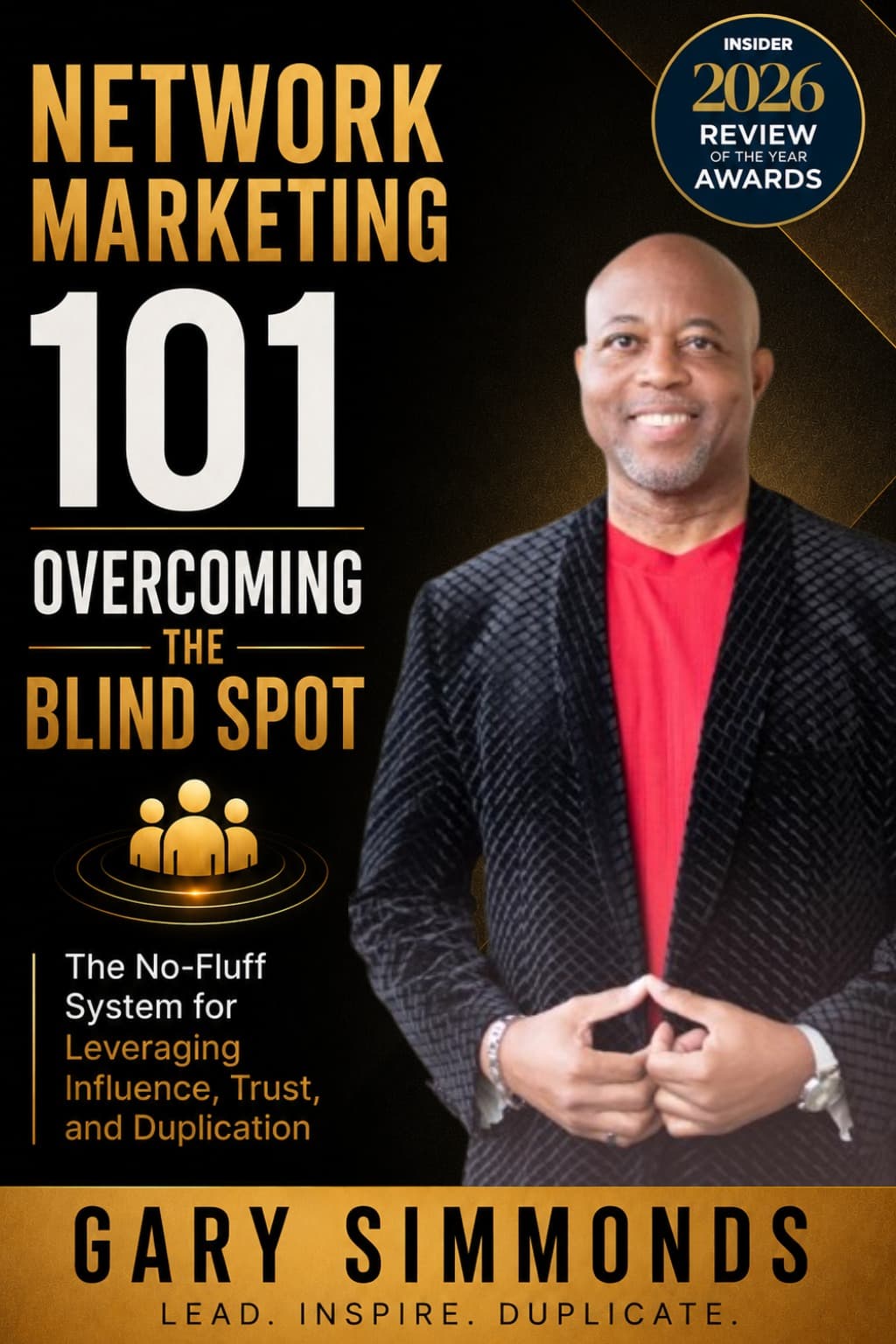
Gary Simmonds teaches network marketers a simple, duplicatable team-building system, which is the work described on his about page. He does not treat "it has a product" as proof. A product can be real and the pay plan can still reward recruiting more than selling. His field guide, Network Marketing 101: Overcoming the Blind Spot, is a $27 digital book on influence, trust, and a process another person can repeat. It is education, not an income offer. Results vary, and nothing in the book guarantees earnings.
Network Marketing vs Pyramid Scheme
Use this comparison when a friend forwards you an invitation. Read each row, then ask the person who invited you to point to the written policy behind it. A confident pitch with no document is not an answer you can rely on. The decisive checks are in bold so you can scan them first.
| What you check | Network marketing that can be legitimate | Pyramid scheme pattern |
|---|---|---|
| Where pay comes from | You can earn from sales to people who are not in the business. | Pay depends on recruiting and on what new people buy to join. |
| Product role | People outside the team would buy it without a business pitch. | The product mainly gives recruits something to purchase. |
| Inventory | You order what you can sell or use, and you can return unsold stock. | You must keep buying a set amount to stay active or get paid. |
| Recruiting | Recruiting is optional. Selling still makes sense if your team stays at zero. | Recruiting is required. You are told you cannot make money unless you sponsor people. |
| The pitch | Time, cost, and typical results are written down before you pay. | Lifestyle claims and quit-your-job talk come before any disclosure. |
A single flattering row can still mislead you. A scheme often sells a real cream, a real drink, or a real service. The FTC notes that pyramid schemes frequently sell actual products, sometimes from brands you have already heard of. Do not stop at the catalog. Ask who purchases the product when nobody is trying to recruit them.
Key takeaway: if the only way to get paid is to recruit, and you must keep buying product to stay qualified, the FTC's own consumer advice is to walk away. A company that argues with that sentence is describing its own pay plan.
What a Real FTC Case Shows About the Test
A hypothetical kit price is easy to dismiss. A court record is harder. In May 2023, a federal court in Arizona sided with the FTC against James D. "Jay" Noland, Jr. and others who ran Success By Health and VOZ Travel. The court found both were pyramid schemes, imposed a permanent ban on their participation in multi-level marketing, and entered a $7.3 million judgment. The FTC's May 25, 2023 press release is the public summary of that ruling.
The facts line up with the rows in the table, not with a slogan. The FTC said the operators promised that "the masses" could make more than $1 million a month by following the system. The court found the opposite. The great majority of Success By Health affiliates were net losers. The few who came out ahead did not get anything close to the "financial freedom" in the pitch. One person described as a top retailer earned less from those sales than a full-time minimum-wage job.
The court also looked at how the story was sold. Noland told members he had been "financially free" since age 36. The court found that at 36 he was living, or about to live, off credit cards. False wealth claims were used to make the income story feel real. That is the pattern behind the warning about screenshots and car photos. A personal claim is not a disclosure, and a big number is not a typical result.
Staff guidance the FTC published for the industry explains the legal test the court applied. Under the long-standing Koscot standard, people pay for two rights. One is the right to sell a product. The other is the right to get rewards for recruiting that are not tied to sales to ultimate users. The 2023 Success By Health ruling is one place that test showed up in practice. The record described large up-front product packs and pressure to keep buying each month. Recruits were pushed to copy that buying to stay on a path to "financial freedom." Inventory bought so you can qualify, rather than so a customer can use it, is evidence, not a side issue.
Use the case as a reading method, not as a claim about any company you are looking at today. Ask whether the pitch leads with a lifestyle number. Ask whether a starter pack or a monthly order is what keeps you qualified. Ask whether anyone has published how many people lost money. If those answers are missing, you already have the same gap the court filled with evidence. No earnings, rank, or team size is guaranteed in any plan, including a lawful one.
How Do You Test an Offer Before You Join?
Run this test before you pay a starter fee, purchase a kit, or message your contacts. Write each answer down. If the sponsor says to trust them instead of showing the policy page, stop before you spend anything.
- Ask for customers who are not distributors. You want people who buy the product and have no interest in the business. If every "customer" is also on the team, you are looking at internal consumption, not retail demand.
- Ask whether you get paid if you never recruit. A lawful plan should be able to pay you for your own sales to retail customers. If the only path to a check is a downline, treat that as the FTC's walk-away test.
- Add up required buying. Starter kits, monthly autoship, training fees, event tickets, and sample packs are all money out. If you must buy product on a schedule to qualify for bonuses, even when your shelf is full, that is a warning. The Success By Health record is a picture of that pattern at scale.
- Read the earnings disclosure, not the screenshot. Look for how many people earned nothing, how expenses are handled, and whether the example is typical. A car photo is not a disclosure. In the 2023 case, the court found most affiliates lost money while the pitch talked about millionaires.
- Check the exit. Ask what you can return, in what window, and whether refunds are punished. A company that makes leaving expensive is protecting the recruitment stream.
- Sleep on the invite. High-pressure deadlines ("the price changes tonight") are a sales tactic, not proof of scarcity. The FTC specifically warns against high-pressure recruitment and exaggerated income promises.
A workable answer sounds ordinary rather than exciting. Customers exist outside the team, you can order in small amounts, unsold product can come back, and your own retail sales can pay you. A scheme's answer sounds urgent instead. The kit is treated as the customer, the three-by-three chart is treated as the plan, and the disclosure sits in a back office you cannot open yet. You do not need that later page. The missing document is the answer.
Write the numbers you can verify before you compare dreams. Kit price. Monthly required order. Event fees. What a retail sale pays you. What a recruited purchase pays you. If the second number dwarfs the first, the plan is telling you which behavior it wants. That comparison is not a promise about your results. It is a map of the incentive. No earnings or rank are guaranteed.
What Should You Do After the Test?
Three outcomes cover the decision. You do not need a fourth category for trying harder out of guilt.
Walk away when pay depends on recruiting, when you must buy inventory to qualify, or when nobody can show customers outside the team. Thank the person and leave the conversation. You do not owe anyone a debate. If they ask for a source, send the FTC's May 2023 release on the Success By Health ruling and the FTC consumer page on multi-level marketing and pyramid schemes.
Slow down when the retail path exists but the pitch is mostly lifestyle. Ask for the earnings disclosure and the return policy before you pay. Buy a small amount of product as a customer first, with no signup, if the company allows it. If they will not sell to you unless you join, that refusal is data.
Stay curious only when you can explain the offer to a skeptical friend without hiding a fee. You should be able to name the customer, the price, your startup cost, and the fact that most people earn little. No earnings, rank, or team result is guaranteed. Your time and your relationships are the stake.
If the offer passes and you still want a simpler way to think about the work, start with a field guide rather than a starter kit you do not understand. Network Marketing 101: Overcoming the Blind Spot is Gary's $27 digital book on influence, trust, and duplication. The purchase page continues to secure Stripe checkout for that book, and you can read it on any device. The offer page states that results vary and that there are no guaranteed earnings or outcomes. It does not promise a rank, a team, or an income.
What Warning Signs Mean You Should Walk Away?
You do not need a law degree to spot the pattern. Walk away when several of these show up together. One awkward answer can be a new sponsor who has not read the policy. A stack of them is the business model.
- The income story is the product. You hear ranks, trips, and "retire your spouse" before you hear who the customer is.
- You must buy a quota to stay qualified, even if you cannot sell it.
- Recruiting your family is framed as loyalty, and questions are framed as negativity.
- Training is a second bill. You pay the company or the upline again to learn the script you need in order to recruit.
- Nobody can show retail sales to people outside the pay plan.
- You are told the opportunity is "not a job" and also told you will replace your job next quarter.
The FTC's plain version is short enough to remember. If you can make money only by recruiting other people and by buying large amounts of inventory, walk away. A company that argues with that sentence is describing its own pay plan.
There is a second trap after the legal test. Some lawful companies pass the retail check and still lean on hype. You can decline those offers too. Saying no to a weak opportunity is not an attack on the people inside it. Many of them heard the same pitch you just heard.
What Should You Ask Before You Invite Anyone Else?
The scheme question gets sharper once you are the person sending the invitation. If you would not want a relative to join on the facts you currently have, do not send that invitation to a stranger either. That standard protects the relationship, which is the only asset a new network marketer actually owns at the start.
Before you invite someone, be able to explain four facts in ordinary language. State what the product costs compared with a store alternative. State what you personally spent during the first month. State whether you have sold to anyone who is not building a team. State what the written earnings note says about typical results. If you cannot cover those four points, you are forwarding a pitch rather than giving an explanation.
If the offer passes the retail test, the next question is how to build without hiding the pay plan. That is a different topic from the scheme test, covered in how to build a network marketing business ethically. Gary's teaching centers on influence, trust, and a process another person can repeat. None of that works if the first conversation hides the pay plan. Building a team ethically starts after you have a company you can describe without flinching. It does not start with a script that dodges the pyramid question.
When someone asks whether the offer is a pyramid, do not laugh the question off. Answer with the retail test instead. Show them they can buy the product without a signup. Tell them recruiting is not required for you to be paid on a sale. If that answer is false, do not recruit them.
Frequently Asked Questions
Is network marketing illegal?
No. Network marketing is a legal sales model in the United States when people can earn from real sales to retail customers. A company becomes an illegal pyramid scheme when the pay plan rewards recruiting instead of those sales. The FTC reviews the whole setup, not a single slogan, and says many plans need a close look.
Does a real product mean it is not a pyramid scheme?
No. The FTC says pyramid schemes often sell actual products, including familiar ones. The Success By Health case is one example: the court still found a pyramid scheme. Ask whether people who will never join still buy the product, and whether you get paid for those sales without recruiting.
Why do people say every network marketing company is a pyramid?
Because the org chart is wide at the bottom, and because some famous offers were schemes or left most people with losses. The chart shape is normal in business. The loss stories are a reason to read the disclosure, not a reason to skip the retail test.
Can you make money without recruiting?
In a legitimate plan, yes. You should be able to earn from your own sales to customers outside the business. Most participants still make little or no money after expenses, according to the FTC, so "you can" is not "you will." No earnings or rank are guaranteed.
What is the fastest way to tell the difference?
Ask two direct questions and wait for a document, not a story. Can you get paid for selling to people who are not distributors? Do you have to keep buying product, or keep recruiting, before you see a commission? If the honest answers are no and yes, walk away.